

When your pizza makes a great impression, customers come back for more. And with Americans eating over three billion pizzas every year, there are plenty of opportunities to win loyal fans and keep sales growing.
Read on for tips to help keep your pizza crust on point. We’ll identify common pizza dough dilemmas, their causes, and easy, expert solutions.
Pizza problems we’ll help you fix:
- Dough that won’t rise
- Pizza dough that isn’t crispy enough
- Dry pizza dough
- Sticky pizza dough
- Too many bubbles
- Overproofed/underproofed pizza dough
- Burned pizza crust
- Pizza that bakes unevenly
- Crust that lacks integrity
1| Pizza Dough is Not Rising
Flat pizza dough can feel like a real bummer, but we promise, it happens to even the most seasoned pizza pros. Here are the factors that affect rising and how to fix pizza dough that won’t rise:
Flour
Different flours have varying moisture and protein levels, and both affect dough texture and rise. If you don’t account for those variations, your dough might fail to rise the way you want.
The fix:
- Weigh ingredients instead of using volume measurements.
- Adjust hydration gradually until the dough feels tacky, not sticky or dry.
- Store properly: Keep flour in an airtight container in a cool, dry place.
- Know your flour:
- Flour with higher protein content (like bread flour) absorbs more water and develops stronger gluten, resulting in better rise and chew.
- Lower-protein flours (like all-purpose or cake flour) need less water and produce a softer, less elastic dough with minimal rise.
- Milling fineness matters, too. Finely-milled Italian “00” flour requires slightly less water than equivalent American flours.
Yeast
Yeast is what makes dough rise, and water is what activates it. If either yeast or water is mishandled, fermentation stalls and pizza dough won’t rise.
The fix:
- While instant yeast can be added directly to flour, active dry yeast must be activated ahead of time. This requires placing the yeast in a small bowl and combining it with a pinch of sugar and tepid water.
- Use warm (not hot) water between 105 and 115°F for active dry yeast.
- In cooler environments, slightly increase the amount of yeast you use.
- Check yeast freshness: Expired or improperly stored yeast won’t ferment properly and can keep dough from rising.
Storage/Prep Temperatures
Both yeast performance and dough fermentation rely on consistent, moderate temperatures. If your prep room swings too hot or cold, or changes quickly, dough rising will be jeopardized.
The fix:
- Control your fermentation environment:
- In hot, humid weather, refrigerate dough longer to prevent overproofing.
- In cold conditions, warm dough gently by resting it near a stove or heater. If that doesn’t work, place a bowl containing the dough in a warm water bath.
2| Pizza Crust Isn’t Crispy Enough
Though dough moisture affects the texture of your finished product, baking and ingredient handling have the most impact.
How to get crispy pizza crust:
- Use high heat to bake your pizza, especially if you’re using lots of moisture-laden ingredients. If you don’t have a high-heat oven, pizza stones retain and distribute heat for high-heat oven crust crispness (and can be produced in any pizza oven).
- Pat wet veggies like peppers, spinach, and onions dry with a paper towel before preparing your pizza.
- Try par-baked crusts. Since they’re already semi-baked, your crust has less of a chance to absorb extra moisture.
3| Dry Pizza Dough
There are different levels of dryness when it comes to pizza dough, and likewise, different remedies.
How to fix dry pizza dough:
- If dough simply looks dry, add a little water and knead it in until the dough looks smoother and is easier to work with.
- If your dough looks dry/cracked and has specks of dead yeast on the surface, it has been overproofed. Another sign of overproofed pizza dough is a strong beer-like odor. Overproofing can sometimes be fixed—we cover proper dough proofing and solutions below in #6.
4| Sticky Pizza Dough
Pizza dough should be tacky, but not overly wet or sticky. Stickiness can be caused by using too much water, not kneading it enough, or overproofing.
How to fix sticky pizza dough:
- Add more flour, a little at a time, until the dough becomes easier to work with.
- Knead for 8-10 minutes by hand, or 5-7 minutes if you’re using a stand mixer with a dough hook.
- If sections of your dough have clumps of flour, the rest of the dough can be too sticky. Let the dough rest for a few minutes to absorb more of the flour before you start kneading again.
- If you’ve overproofed it, check out section (#6) below.
5| Too Many Bubbles
Air bubbles in pizza dough are a normal part of yeast fermentation. Small, evenly distributed bubbles are a good sign, but large, uneven bubbles can create what we call the “bubble and burn” effect on finished pizzas. Not a good thing.
How to fix air bubbles in pizza dough:
- Allow the dough to proof longer in a cooler environment.
- Punch down the dough to reduce bubbles.
- Gently press the bubbles out or dock the dough when stretching the dough out for baking. Take it easy on docking if you plan to top the pizza with veggies, as the holes may cause juices to leak and make the pizza soggy.
- Get more tips for preventing bubbly pizza crust here.
6| Overproofed/Underproofed Pizza Dough
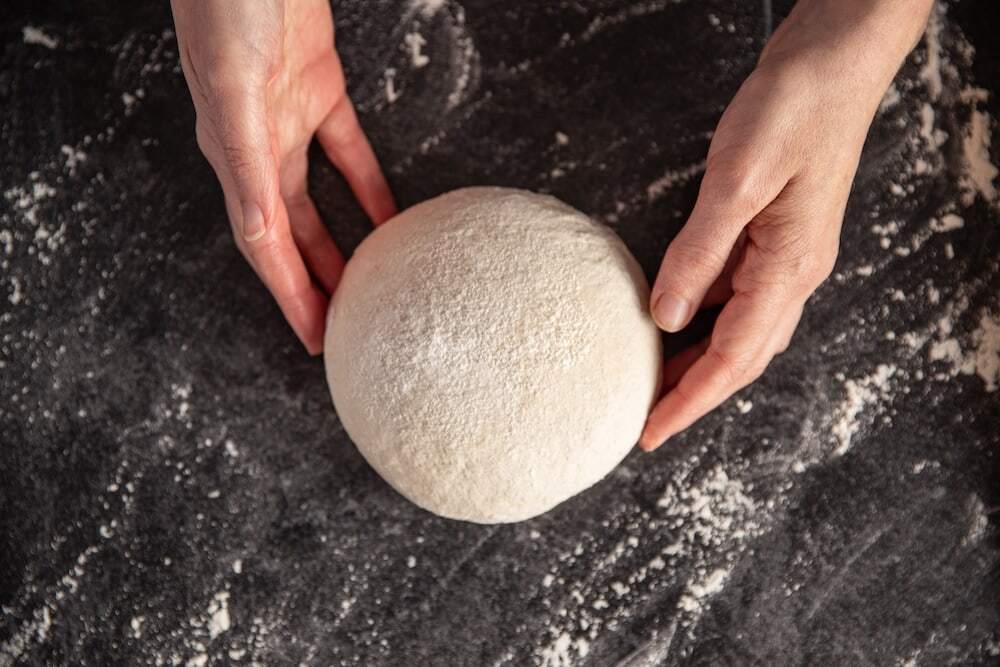
Dough proofing can be fickle. Under-proofed pizza dough will be nearly white, tight and springy, and when gently poked, the indentation made by your finger will bounce back. Over-proofed pizza dough will be gray, have a loose consistency, and display a rippled surface. It may also expel gas and collapse when you poke it.
Proofing starts with good dough management, which means either cooling or warming dough during proofing so that fermentation (the rate of rise) is either slowed down or sped up. Fermentation is slowest at 33°F. As the temperature increases, fermentation accelerates until it reaches 100°F, then begins to slow. At 140°F, the yeast dies, essentially “killing” the dough.
How to properly proof pizza dough:
- Divide the dough into smaller pieces. We call portioned dough like this dough balls.
- Place dough balls onto ungreased bakery-style sheet pans. Allow ample room around each dough ball, as they will double in size. Wrap tightly with cling film.
- Ensure there is ample cold airflow in your cooler. Keep trays off the floor and allow for a 3-inch gap between stacks as well as between the trays and cooler wall. After dough reaches 40°F, stacks can be moved closer together.
- Proof for a minimum of 24 to 48 hours.
- Place dough balls at room temperature for final proofing prior to baking.
- Confirm that your dough is properly proofed by assessing appearance. Well-risen dough nearly doubles in volume and holds an indentation when gently poked.
How to fix underproofed pizza dough:
- It’s way easier to fix underproofed dough than overproofed dough.
- Just give it more time or bake it longer at a lower temperature.
- Some pizza pros will try a “re-knead":
- Hold the overproofed dough on two opposite sides and stretch until taut, then fold it over like a book.
- Rotate 90 degrees and repeat.
- Tuck the edges underneath to tighten into a smooth ball.
- Cover at room temperature for 20–30 minutes before using.
- If your dough fails to respond, it’s best to chuck it and start over.
7| Burned Pizza Crust
There are pleasingly charred pizza crusts—like wood-fired creations—that customers anticipate and rave over. Then there are burnt crusts that they’ll send back to the kitchen.
The fix:
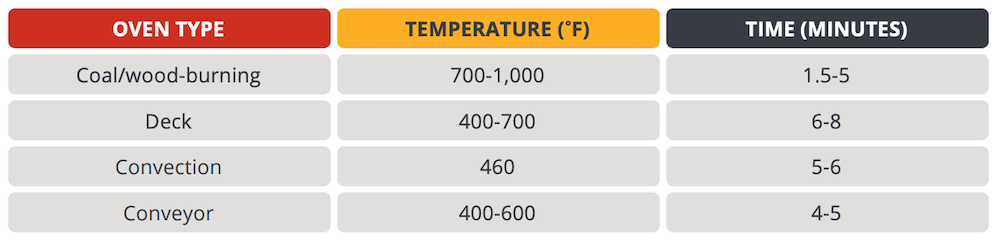
- Oven type, temperature, and timing: The type of oven you use dictates correct baking temperatures and times.
- Sugar content: Since sugar in dough encourages burning, follow the general rule: the greater the sugar levels, the lower the baking time. The opposite is true for dough with low or no sugar content.
- Flour use: Flour helps pizza release cleanly from peels, but it can also contribute to burning since the dough will be in very close contact with the oven deck surface.
- Get more best practices to keep pizza from burning here.
8| Pizza Bakes Unevenly
Wood-fired crusts are particularly susceptible to uneven bakes, often charring on one side and being somewhat underdone on the other.
The fix:
- Rotate for even baking: Rotating your pizza as it bakes promises an even cook and a golden-brown crust. Don’t rely on toppings alone—they often look done before the crust is fully baked.
- Consistent rotation timing helps prevent uneven coloring, which can also result from hot or cool spots in the oven.
- Watch oven temperature: If the pizza has a few brown spots, but the crust is mostly pale or yellow, the oven floor isn’t hot enough. If the crust is very dark or burnt, the oven is too hot. To fix it, let the stone cool in brick or wood-fired ovens, or lower the flame or temperature in other oven types.
9| Pizza Crust Lacks Integrity
Take-and-bake pies, ready-to-eat slices held under warming lamps, and even pizzas that are boxed for refrigerated cases or delivery can easily have compromised crusts.
The fix: The type of crust used impacts integrity. Frozen dough balls may be a good fit for operations that have capacity for dough and crust prep, but par-baked crusts deliver ideal solutions for c-stores, pizzerias, entertainment venues, and every type of operation in between.
- Allow for long hold times in refrigeration and on the shelf once finished
- Maintain integrity under warming lights
- Are easy to store and handle with a long shelf life
- Have short final bake times—great for kitchen process efficiency!
- Come in a range of styles, textures, and flavors that offer easy prep and versatility
- Provide unwavering consistency from pizza to pizza and location to location
Partner with the Experts and Never Fall Victim to Pizza Dough Frustrations Again
Partnering with AK Pizza Crust’s dough experts will help you overcome everyday frustrations while fully leveraging the benefits of frozen dough balls and par-baked pizza crusts. Our products can easily take you from crisp, flaky, ultra-thin to a lightly chewy, yeasty New York-style pizza, all without expecting your customers to settle for less than the best.
![How to Get Perfectly Proofed Pizza Dough Every Time [VIDEO]](https://www.akcrust.com/hs-fs/hubfs/Blog_Images/Luke-Siedow.jpg?width=265&height=151&name=Luke-Siedow.jpg "Blog: How to Get Perfectly Proofed Pizza Dough Every Time [VIDEO]")